The short answer
Choose a first channel where you can reach people with a recognizable need and show why your product fits. Write down why that route wins over the alternatives and what you still do not know. One SaaS founder reports reaching 4000 customers in less than 1 year across a sequence that began with direct outreach, not from outreach alone.1 One product builder reports that 4 people from search became paying customers in the second half of October after a free tool attracted search visits.2
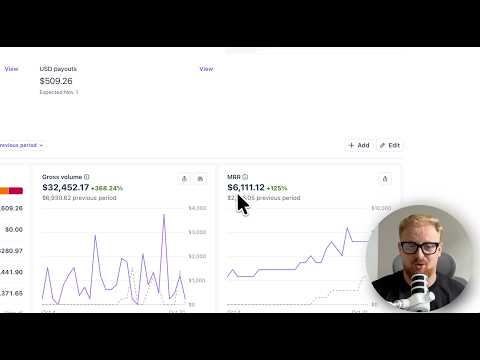
What founders did
7 real examples, each linked to the moment in the source. Results are self-reported.
- X
Pierre-Eliott Lallemant
He reports reaching 4000 customers in less than 1 year across the full sequence, not through outreach alone.
Started with outreach to people showing intent, then added other routes while keeping earlier ones active.
- Reddit
Strong_Teaching8548
The poster reports that 4 people from search became paying customers in the second half of October, when tracking began.
Built a free tool that performs the first step of a paid product and attracted search visits.
- X
Axel Schapmann
He says that content brought first users for almost every product he launched, without a channel-specific count.
Used organic LinkedIn and X content to find users for products.
- X
Mike Fishbein
He calls the existing routes working channels but reports no result for the planned ads.
Identified organic X, LinkedIn, and network referrals as working routes and planned LinkedIn ads for a desired client segment.
- X
Mat De Sousa
Spoke with Shopify agencies to find gaps in existing apps.
- YouTube
Fomin Unscripted
The unnamed guest says the videos appeared repeatedly in results for that search term; the supplied segments give no purchase count for those videos.
An unnamed guest in the publisher's video targeted a search term with videos demonstrating payment and the resulting reservation.
- YouTube
Starter Story
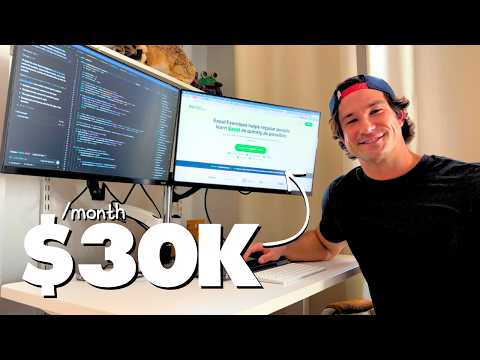
The guest says the page brought their most traffic, which they considered their highest-intent traffic, and says sales came from it.
An unnamed Excel training guest in the publisher's video wrote landing-page copy explaining the product and how it differed from videos.
Your playbook
Use this when
Use this if people can already try or buy your product and you need to choose an initial acquisition focus.
You’ll leave with
Leave with a channel decision worksheet recording the buyer path, reachable routes, required proof, chosen focus, and unresolved assumption.
Trace how the buyer seeks help
- Do
In the worksheet, name the user and buyer if different. Record their recognized problem, what prompts action, and whether they search, ask peers, or consult a specialist. Name the specific place or person involved.
- Make
Add the buyer path and the people or places on it.
- Check
If the encounter is only a guess, investigate the buyer path before picking a route.
Why this step is in the plan
Shortlist routes you can reach
- Do
Beside the buyer path, list plausible routes such as search, direct contact, specialists, or a relevant community. For each, record the buyer signal you would respond to and whether you can access that setting.
- Make
Add reachable channel candidates and their buyer signals.
- Check
Remove a candidate if you cannot locate or access its relevant buyers.
Why this step is in the plan
Match each route to proof you can provide
- Do
For each candidate, note what would make the product understandable and credible there: an explanation, a visible workflow, or a trusted introduction. Record whether you can provide that proof now.
- Make
Add required proof and your ability to provide it for each route.
- Check
If you cannot provide the proof a route requires, defer it or change how you present the offer.
Why this step is in the plan
An unnamed Excel training guest in a Starter Story video says explanatory landing-page copy brought their most traffic, which they considered their highest-intent traffic.7 Mike Fishbein says organic social and referrals were working for his business; he planned a clearer offer and LinkedIn ads to pursue a different client segment, but gives no result for those ads.4
Choose an initial focus, not a permanent winner
- Do
Choose the candidate with the clearest buyer path, access, credible proof, and work you can sustain. Write why it beats the alternatives and which assumption remains uncertain. Treat it as a first focus, not proof that the channel works.
- Make
Complete the worksheet with a first channel, choice rationale, and open assumption.
- Check
If no route has both buyer access and credible proof, keep investigating rather than committing.
Why this step is in the plan
Lallemant reports reaching 4000 customers in less than 1 year across a sequence of routes; he says outbound continued as new routes were added.1 Schapmann emphasizes choosing a channel he can consistently invest time in and names Reddit, YouTube, and cold outreach as alternatives to social content.3
Choose by buyer path and available proof
- Where buyers seek help
Buyers search for a specific solution
Route to considerSearch page or product walkthrough
Question before choosingCan you answer that search and show what the product does?
- Where buyers seek help
You can identify people with a current problem
Route to considerDirect outreach
Question before choosingCan you identify a relevant problem signal and reach the appropriate person?
- Where buyers seek help
Specialists advise your buyers
Route to considerSpecialist introductions
Question before choosingCan the specialist recognize the problem and credibly introduce your offer?
- Where buyers seek help
Buyers ask peers for help
Route to considerRelevant community or social content
Question before choosingCan you make the product relevant in that setting rather than merely attract attention?
Choose
Prefer the route with recognizable buyer need, credible product proof, and access you can sustain.
Investigate
If the buyer's discovery path is a guess, find out where they seek help before selecting a route.
Defer
Set aside a route if you cannot reach its buyers or provide the proof its audience needs.
Make it yoursChannel decision worksheet
A fill-in template for your own test
Buyer and user: [who decides; who uses] Recognized problem: [what prompts action] Discovery path: [where they look; whom they trust] Candidate routes: [places you can reach] Proof required: [what they need to see] First channel: [chosen route] Reason over alternatives: [buyer path, access, proof] Unanswered assumption: [what you still need to learn]
When this works
- Use this decision process when you can describe a buyer's problem and compare routes you can realistically access.
When to avoid
- Do not choose a platform solely because its audience is large or another startup grew there.
Related questions
Should I launch publicly to find my first customers?
In Shantanu R's analysis of 50 AI startups, only 5 primarily got their first paying customers through a public launch.8 Consider a public launch when its audience matches your buyer, rather than treating it as the default route.
Should I choose paid ads or organic content first?
The Excel training guest in a Starter Story video says sales came from the landing page before they started paid advertising.7 Consider either route if you can reach the intended buyer with an offer you can explain; do not assume every startup must begin with the same one.
Does viral content mean I should choose social media?
A speaker in a Starter Story Build video describes an entertainment skit with about 15 million views that did not convert particularly well; its product mention came near the end.9 Favor a content route when its format can make the product relevant to the people it attracts.
Can users lead me to a different buyer?
The Excel training guest in a Starter Story video says people who tried the training told their bosses, who then asked about signing up a team.7 If users and purchasers differ, include the handoff between them in your buyer path.