How to Make AI Agents Reliable in a Startup

Explosive GrowthUpdated From 47 lessons by 4 founders and 7 other sources

11 sources ↓

The short answer

Make an AI agent more dependable by defining its expected behavior, testing exceptions, restricting its tools, reviewing consequential actions, and learning from production runs. A workflow demonstrator reports that a revised Monday brief flagged a shortage of one cleaner for the following Thursday. A trading-agent creator reports fixing a memory issue during an experiment involving $500 of real money over about two months.

What founders did

7 real examples, each linked to the moment in the source. Results are self-reported.

  1. YouTube

    Mitchell Troyanovsky

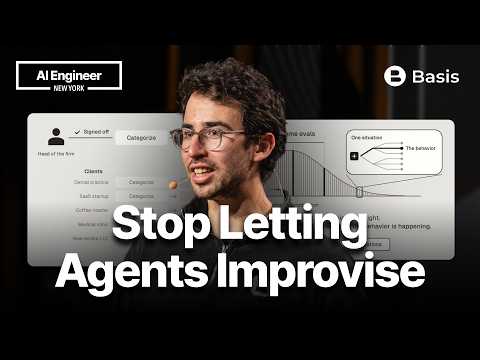
    Described Basis's behavior spec for stating important intended agent behavior and checking relevant runs against it.

  2. YouTubeDemonstrated total: 6100

    Mohammad Rameez Imdad

    The demonstrated calculation returned 6100.

    Demonstrated AI extracting order items and code calculating the total from product prices.

  3. YouTube

    Sharbel A.

    Described per-app permissions and kept a connected payment app read-only.

  4. YouTube

    Cole Medin

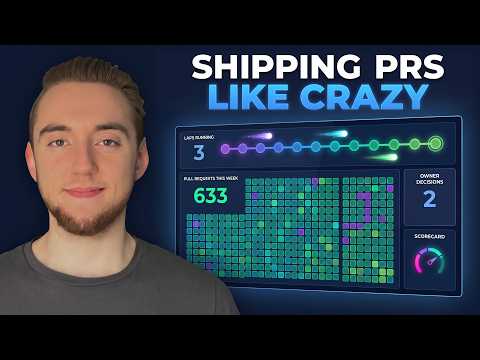
    Built a workflow dashboard that surfaces decisions requiring human attention.

  5. YouTube

    AI Master

    The following Monday's shorter brief flagged a shortage of one cleaner for the following Thursday.

    Demonstrated revising a business brief to prioritize staffing warnings and omit routine email listings.

  6. YouTube

    AI LABS

    Demonstrated turning feature requirements into eval files and requiring review of those evals before building.

  7. YouTubeMemory issue required a fix

    The Tech Girl

    The creator reports that a memory issue required a fix and that the agent sometimes did nothing.

    Described a trading-agent experiment with tool connections, memory, instructions, testing, and scheduling.

Your playbook

Use this when

Use this playbook when you have an AI workflow to deploy or improve and can inspect its inputs, outputs, and tool permissions.

You’ll leave with

Build an agent reliability worksheet containing a behavior spec, test cases, permission boundaries, approval points, and a run-review plan.

01

Specify the behavior before editing the prompt

Suggested next steps
Do

In the reliability worksheet, identify the workflow's trigger, source records, required output, forbidden actions, and human handoff. Mark calculations or fixed rules that should run outside the model.

Make

Add a behavior spec and an exact-operation boundary to the worksheet.

Check

If a reviewer cannot judge a run against the spec, clarify it before changing the prompt.

Why this step is in the plan

Mitchell Troyanovsky says Basis developed a behavior spec to identify the important intended behaviors before writing agent context. Mohammad Rameez Imdad's order demo assigns AI the interpretation of a chat and leaves pricing from product data to code; the demonstrated calculation returns 6100.

02

Test ordinary behavior and exceptions

Suggested next steps
Do

Add an ordinary input, missing data, an unsupported request, and a tool failure to the worksheet. State the expected result or handoff for each, run the agent, and record what happened.

Make

Add a case ledger with expected behavior, actual behavior, and pass or fail.

Check

If a bad run passes, tighten the check; if a case fails, repair and rerun it before release.

Why this step is in the plan
Troyanovsky describes using the spec as a rubric: ask whether a behavior was relevant in an agent trajectory and, if so, whether it appeared. In the AI LABS demo, feature requirements become eval files containing checks, so an agent must show a result rather than merely claim completion.

03

Fence tools and external actions

Suggested next steps
Do

List every tool and credential the workflow can use. Assign the narrowest access suitable for its tested behavior, block consequential actions it need not take, and name an approver for exceptions.

Make

Add a permission map, blocked actions, and approval owners to the worksheet.

Check

If a forbidden action can execute without approval, narrow access before proceeding.

Why this step is in the plan

Sharbel A. describes limiting connected apps to read-only or write-without-delete access and says he kept a payment app read-only. Josh Elman argues for boundaries on agent data, app access, and spending, with a check-in before an agent crosses them.

04

Review before scheduling or release

Suggested next steps
Do

Assign a reviewer to the test definitions and consequential outputs. Inspect varied manual runs, record edits and rejections, and decide which tested branch, if any, may be scheduled or released.

Make

Add review ownership, approval points, and a branch-specific release decision.

Check

If behavior still surprises the reviewer, the process is unsettled, or a gate is bypassable, keep the workflow under manual review.

Why this step is in the plan

The AI Master video advises trying different real cases by hand and scheduling only when results stop surprising the reviewer and the process itself has settled down. The AI LABS demo places another gate earlier: a person reviews the evals before the agent builds.

05

Log runs and repair what fails

Suggested next steps
Do

For released runs, retain the input reference, agent decision, tool action, approval outcome, and error. Inspect exceptions and rejected outputs; add reproducible failures to the case ledger before changing instructions or widening permissions.

Make

Add a run-review log, regression cases, and the next permission decision.

Check

If a failure cannot be traced and replayed, improve the record and hold the current permission boundary.

Why this step is in the plan

Cole Medin describes a dashboard for his agent workflow that surfaces decisions needing human attention, rather than leaving every decision inside the workflow. The Tech Girl reports a memory issue requiring a fix in a trading-agent experiment that included testing and scheduling.

Suggested workflow

A release path for an AI agent

  1. Before you allow

    Expected behavior is unclear

    Add this control

    Specify the input, output, exact operations, and handoff

    Continue only if

    A reviewer can distinguish an acceptable run from an unacceptable one.

  2. Before you allow

    The ordinary case works

    Add this control

    Test missing data, unsupported requests, and tool failures

    Continue only if

    Each failure produces an identifiable repair or a defined handoff.

  3. Before you allow

    The agent can affect customers, money, or data

    Add this control

    Restrict permissions and gate consequential actions

    Continue only if

    A blocked action cannot execute without its assigned approval.

  4. Before you allow

    The workflow is ready for release review

    Add this control

    Inspect varied manual runs, then log released runs

    Continue only if

    Reviewers understand its behavior, the process is settled, and exceptions remain traceable.

Release boundary

Keep consequential actions behind review unless the relevant tests pass and the approval gate works.

Expansion boundary

Expand only a tested branch or permission; keep other boundaries in place.

Make it yours

Agent reliability worksheet

A fill-in template for your own test

Workflow and trigger: [task and event] Expected behavior: [observable result] Exact operation: [code or fixed rule] Ordinary case: [input and expected result] Exception: [input and expected handoff] Forbidden action: [action and permission block] Approval owner: [person and decision] Run record: [input reference, decision, tool action, review outcome]

When this works

  • Use this release path when outputs can be inspected and consequential actions can be blocked or sent to a reviewer.

When to avoid

  • Do not grant unattended write access when you cannot test relevant failures, trace actions, or enforce a handoff.

Related questions

How do I tell whether my agent calls the right skill?

IBM Technology explains that a skill's description should say both what it does and when the agent should use it; a description that merely says it generates reports is too vague. Add cases where the skill should run and cases where it should not.

What should I measure besides task completion?

Greg Isenberg warns that an agent optimizing for passing tests might rewrite them, or close support tickets without solving them. Pair completion with a check for the harmful shortcut it could reward.

Can I compare agents with the same test cases?

Lenny Rachitsky's newsletter reports that unequal connectors prevented an agent in a personal-agent comparison from completing several work tasks. Record each agent's available tools and permissions beside its results before comparing them.
The reference library

Explore the originals.

The videos, articles and conversations behind the playbook.

11 of 11 sources · Results are self-reported.

  1. Source 1 · YouTube

    How to Set Up Claude for Small Business (AI Automation Guide) ↗

    AI Master · October 31, 2026

    Read the supporting excerpt
    …check to the brief. If any day has more … jobs booked than cleaners available, it … should say so near the top. We also ask … it to stop listing every weekend email. … We only want the ones that actually need … our attention. The following Monday, the … brief comes back shorter. The staffing … warning sits right under the overdue … invoices, and it flags that next … Thursday is one cleaner short. Neither … Then run…
    Explore this lesson →
  2. Source 2 · YouTube

    I Built an AI Agent That Trades Stocks and made me Money! ↗

    The Tech Girl · October 31, 2026

    Read the supporting excerpt
    …I gave my agent $500 of real money and let it trade stocks for about two months. In this video, I show you how I built it, what went wrong, and the results. We’ll walk through the five steps: connect the tools using MCP, set up the agent’s memory in Notion, write its instructions, test it, and schedule it to run every weekday. I also explain the difference between AI agents and automation, the trading rules and…
  3. Source 3 · YouTube

    Why AI Makes You 100x Faster but Not Your Company - Mitchell Troyanovsky, Basis ↗

    AI Engineer · November 4, 2026

    Read the supporting excerpt
    Basis was this concept of a behavior … spec. … And the idea of a behavior spec is … before we update the context or write … the context, uh … what do we actually want? What is our … writing every detail down. You should be … taking the most important opinions and … of state. So, you define the ones that … matter the most. … And then you can use them as a way to … from a spec perspective, but then you … can also use…
    Explore this lesson →
  4. Source 4 · YouTube

    n8n AI Agent Tutorial: Claude Code Built a Complete Order to Delivery System (n8n MCP) ↗

    Mohammad Rameez Imdad · November 2, 2026

    Read the supporting excerpt
    …calls, like a function. The AI agent … turns a chat into a clean order and only … structured output parser forces its … money not AI? Look at this code node, … price the order. The AI only says rice … two, oil one. The code node takes each … price from products, 2 * 1800 + 2500, … 6100.
    Explore this lesson →
  5. Source 5 · YouTube

    The New Hermes Marketplace Is Insane (10 Plugins To Install Today) ↗

    Sharbel A. · November 5, 2026

    Read the supporting excerpt
    You can limit each app to reading only … or let it write but never delete. For … example, with something like Stripe, I … had to keep it on read only. Now, this
  6. Source 6 · YouTube

    My AI Software Factory Ships Hundreds of PRs a Week (Here's How I Manage It) ↗

    Cole Medin · November 2, 2026

    Read the supporting excerpt
    …different components that I have of my … dashboard here. Like this is the full at … a glance view of the software factory … have the individual decisions that we … make when the factory brings things to … us. The highle decisions that need our … systems, the only way to truly make this … reliable is if we have some things that … bubble back up to the human to decide.
  7. Source 7 · YouTube

    Anthropic Just Released A New System For Using Claude Code ↗

    AI LABS · October 30, 2026

    Read the supporting excerpt
    …process. Before a change goes anywhere, … they ask Claude to run something that … proves it works and to show them the … result instead of just saying it's done. … In the demo app we were testing on, we … had a specs folder with all the features … inside each folder, we had an RD.md file … that listed the requirements for that … feature. You can ask Claude to create a … skill that turns each feature into an … eval…
    Explore this lesson →
  8. Source 8 · X

    Post by Josh Elman on X ↗

    Josh Elman · November 5, 2026

    Read the supporting excerpt
    …Draw the boundary (which data, which apps, how much they can spend, etc), then let them do everything they can inside it and check in before they cross it. We're still at the early, messy stage, and I love that stage! @illscience and I got into all of it on the pod with @DavidPawlan, who's tested nearly 150 of these so the rest of us don't have to.
  9. Source 9 · YouTube

    5 Best Practices for Building AI Agent Skills ↗

    IBM Technology · August 10, 2026

    Read the supporting excerpt
    The description is the trigger, by which I mean it's the agent description that decides whether a skill ever actually runs. … So the name and the description need to contain enough … information by themselves so that the agent knows when to use it. … So a compliance skill of generates reports might be just a little bit too vague. … The fix is to say what the skill does and when the agent should make use of it.
  10. Source 10 · X

    Post by GREG ISENBERG on X ↗

    GREG ISENBERG · October 31, 2026

    Read the supporting excerpt
    …Basically, an agent will chase whatever number you give it, all day, without asking why. Tell it to make the tests pass and it might rewrite the tests. Tell it to close support tickets faster and it might close them without solving anything. It happens. The best startups have already figured out the fix with people. Airbnb tracks bookings and host cancellations together. HubSpot takes back sales commission when a…
  11. Source 11 · Article

    🎙️ How I AI: Grok vs. Dot vs. Muse vs. Duet + How Figma’s PMs actually use AI every day ↗

    Lenny Rachitsky · November 2, 2026

    Read the supporting excerpt
    …A Codex audit found that Claire’s agents did not have equivalent connectors and skills. Muse lacked Slack and GitHub, which prevented it from completing several work tasks, highlighting the importance of equal setups for a fair comparison. Grok Bot is the agent Claire trusts most with Figma. Dot and Claude Duet mostly filled existing templates, while Grok Bot proposed fresh headlines and layouts that looked like real…

More playbooks

Keep going